Red Tape is America's Real AI Blind Spot

Our read
The United States is treating the AI race like a suburban zoning dispute while China treats it like a mobilization war. The bottleneck isn't the math or the chips; it is a self-inflicted compliance regime that treats national security infrastructure as a local nuisance.


What happened
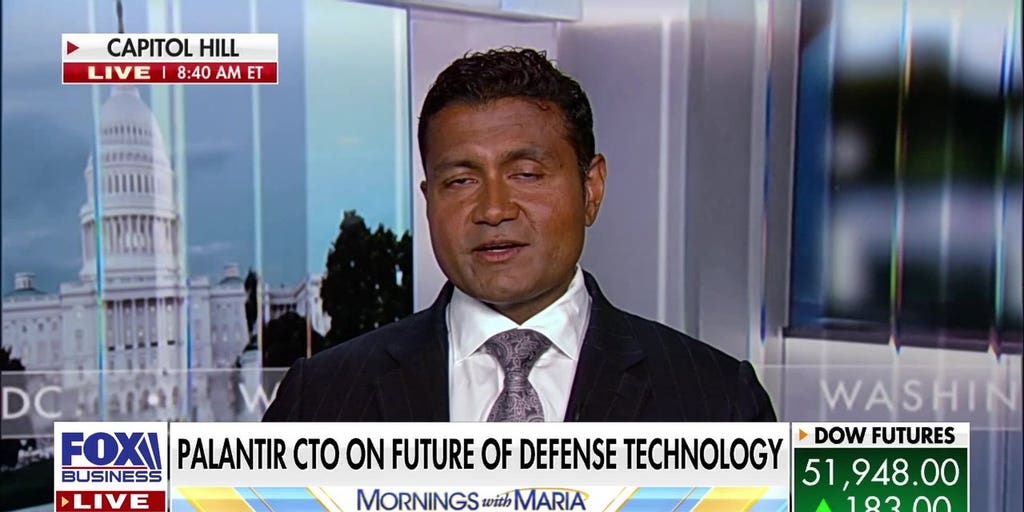
Palantir CTO Shyam Sankar warned that domestic regulatory hurdles and infrastructure delays, rather than raw algorithmic capability, are threatening to hand China the lead in the global AI race.
The brief
Winning a geopolitical tech race requires building at speed, which means clearing the regulatory clergy out of the way of domestic energy and compute production.
The sides
- National Security Realists
Permitting delays and bureaucratic red tape are actively sabotaging American technological supremacy against a rapid Chinese state-backed rollout.
- Precautionary Bureaucrats
Strict regulatory oversight and environmental reviews must govern energy and data infrastructure before deployment can scale.
Why now
Palantir's warning on national television highlights a growing panic among defense tech leaders that America's legacy permitting processes are a national security liability.
As open-weight models from foreign adversaries close the capability gap, the debate has shifted from theoretical safety alignment to raw industrial execution.
Questions
Why is domestic red tape considered a national security threat in the AI race?
Legacy permitting processes delay the construction of data centers and energy infrastructure by years, allowing adversaries to outpace American deployment. While China builds state-backed compute clusters at wartime speed, US projects stall in local zoning boards and environmental reviews. The bottleneck is no longer algorithmic innovation but the physical infrastructure required to run the models.
How does China's approach to AI infrastructure differ from the United States?
China operates on a model of state-directed mobilization that bypasses local friction to build massive compute hubs instantly. The US treats critical national security infrastructure like a suburban strip mall development. This regulatory asymmetry allows Chinese firms to close the capability gap using open-weight models running on rapidly deployed domestic hardware.
What specific regulatory hurdles are slowing down US AI development?
The National Environmental Policy Act (NEPA) and local utility grid queues are the primary culprits delaying data center activation. Interconnection queues for new power generation can take up to five years in major US transmission grids. These administrative backlogs prevent tech firms from securing the gigawatts of power required for next-generation training clusters.
What is the counterargument to cutting red tape for AI data centers?
Critics argue that bypassing environmental reviews risks destabilizing local power grids and increasing carbon emissions. They claim that unchecked data center growth will drive up electricity costs for everyday consumers and strain water resources used for cooling. However, prioritizing local utility preservation over national compute capacity ignores the geopolitical cost of losing technological primacy to an adversary.
What happens next if the US fails to streamline its permitting process?
American AI labs will face a compute ceiling that forces them to ration training runs, while foreign adversaries with unlimited state-backed power scale unchecked. This infrastructure deficit will eventually force US national security agencies to rely on outdated models. The lead in defense tech will shift to nations that prioritize raw industrial execution over compliance theater.
How does this infrastructure bottleneck compare to previous American industrial mobilizations?
During World War II and the Cold War, the US government bypassed local red tape to build critical facilities like Oak Ridge in months. Today, the administrative state treats AI development as a private commercial venture rather than a strategic defense priority. Without a return to that wartime emergency permitting posture, the US cannot maintain its technological edge.
Receipts
Related dispatches
- The D.C. regulatory theater that handed China our AI leadWhile Washington's administrative state spent the last three years obsessing over algorithmic bias, safety theater, and domestic compliance audits, China simply built. We treated AI as an HR problem; they treated it as a geopolitical weapon.
- The AI Race Realism GapThe Washington-Silicon Valley alliance wants you to believe that slowing down AI is a form of national surrender. But the public isn't buying the geopolitical blackmail. People are realizing that being 'beaten' by China is a theoretical threat, while having your white-collar job automated away by a local tech monopoly is a concrete, immediate reality.
- Foreign influence ops weaponize local NIMBYs to choke US AI capacityThe local fight over noise pollution and power lines isn't a grassroots eco-movement; it is a cheap, outsourced asymmetric warfare campaign. Adversaries who cannot out-compute America are using our own municipal zoning laws and hypersensitive local boards to choke our compute capacity before the chips even arrive.
- The Secret AI Arms Race We Knew Was ComingThe borderless open-source sermon is dead. You cannot preach global model harmony when the competitor is a state-subsidized machine designed to eat your lunch. Washington is finally treating code like a weapon, not a public library.
- The Cheap Chinese AI Trap and the Race for American ComputeSubsidized Chinese AI is the new cheap manufacturing trap. Beijing is deliberately underpricing its API compute to hook Western startups on their pipeline, harvesting valuable user data and crippling American infrastructure incentives before our domestic capacity can scale.
- The DeepSeek cop-out and the delusion of a soft AI leadThe sudden media pivot to framing China's AI gains as a win for global consumer choice is a dangerous coping mechanism designed to excuse the West's regulatory self-sabotage.