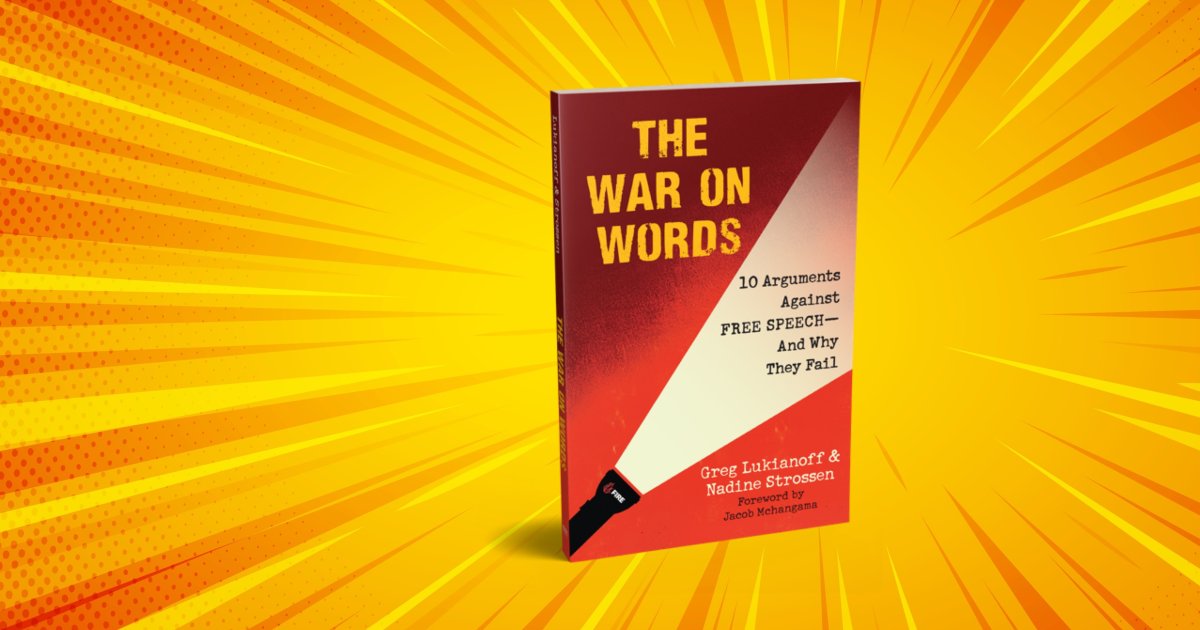
FIRE bypasses the publishing gatekeepers with a free speech library

Our read
The institutional elite spent a decade turning libraries and academic publishing into curated safe spaces designed to filter out dissenting thought. By releasing a free, unthrottled library of classic free speech texts, FIRE isn't just making a point; they are building a parallel pipeline for intellectual self-defense.


What happened
The Foundation for Individual Rights and Expression (FIRE) launched a curated, accessible digital library of classic and contemporary texts on free expression to bypass institutional gatekeeping and academic paywalls.
The brief
The panic over free speech isn't about protecting the public from harm; it is about the credentialed class losing their monopoly on what people are allowed to read and understand.
The sides
- Institutional Gatekeepers
Speech must be actively curated and moderated by credentialed experts to prevent the spread of harmful ideas.
- Free Speech Advocates
Direct access to foundational texts on liberty is the only real defense against ideological conformity and institutional capture.
Why now
As universities and corporate publishing houses increasingly censor historical texts and enforce ideological conformity, public demand for raw, unedited foundational philosophy has spiked.
FIRE's digital library launch directly feeds this growing counter-cultural movement of self-education and intellectual independence.
Questions
Why is FIRE launching a digital library instead of just filing lawsuits?
Lawsuits only clean up the wreckage after censorship occurs, whereas a digital library builds the intellectual infrastructure to prevent it in the first place. By providing direct, unthrottled access to foundational texts on free expression, FIRE bypasses the academic gatekeepers who quietly remove controversial books from physical shelves and digital catalogs. It shifts the strategy from reactive defense to proactive cultural offense.
How do academic publishers and universities restrict access to classic texts?
Institutions restrict access through a combination of exorbitant digital paywalls, ideological curation, and quiet catalog curation. Major academic publishing houses bundle critical historical texts behind expensive university library subscriptions, effectively keeping them out of reach for the general public. At the same time, university departments increasingly replace classic philosophical texts with curated, modern ideological readings.
What is the strongest counter argument against FIRE building this library?
Critics argue that these classic texts are already widely available in the public domain and that FIRE is simply running a redundant public relations campaign. However, this objection ignores how search engine optimization, algorithmic curation, and digital gatekeeping work in practice. Finding a clean, unedited, and contextually accurate historical text online has become increasingly difficult as search engines prioritize sanitized, heavily annotated modern interpretations.
Who actually benefits from having a centralized free speech library?
Independent researchers, students, and self-educating citizens benefit most by gaining free access to primary sources without institutional spin. This library serves as an intellectual armory for individuals who want to challenge prevailing campus or corporate orthodoxies. By removing the financial and institutional barriers to entry, it democratizes the very tools of intellectual self-defense.
What historical precedents exist for this kind of intellectual bypass?
This initiative mirrors the samizdat networks of the Soviet bloc, where banned literature was copied and distributed by hand to bypass state censors. While modern Western censorship is driven by corporate and academic gatekeepers rather than state gulags, the structural solution remains identical. Building a parallel distribution network is the historically proven way to render centralized information control obsolete.
What happens next if this library model succeeds?
Success will likely trigger a wave of similar parallel libraries focusing on other gatekept fields, such as heterodox economics, biological sciences, and Western history. As the public realizes they do not need a university login to access high-level human thought, the financial and moral authority of legacy institutions will continue to decay. The ultimate outcome is a highly decentralized intellectual landscape where credentialing matters far less than raw curiosity.
Receipts
Related dispatches
- The Establishment's 75-Case Free Speech TrapThe legacy press is desperate to rebrand standard administrative friction and campaign NDAs as systemic state censorship to shield their own institutional speech-policing monopoly.
- The AI Rare Book Shredding PanicThe panic over AI companies shredding rare books is peak midwit theater. If a book is so rare that it only exists in three moldy basements, digitizing its contents into a neural network that can actually use it is a massive net positive for human knowledge, even if the paper gets recycled.
- Syracuse University's Creator Economy BureaucracyThe moment a university appoints an executive director to study 'creators' is the moment the administrative state officially tries to gentrify the internet's last wild frontier.
- The Culture War Ended and the Institutions Never MovedBuilding parallel media playpens is a losing strategy. The real battle is a grinding, bureaucratic fight to re-occupy legacy institutions that hold civilizational authority.
- The Federal Court Slapback on State-Sponsored CensorshipThe ruling exposes the administrative state's favorite loophole: outsourcing censorship to private tech companies to bypass the First Amendment.
- Trump's UN Free Speech Declaration Targets EU Tech CensorsUsing the UN to protect free speech is a hilarious, high-IQ judo move. Washington is turning the same international machinery Eurocrats use for speech moderation into a weapon against the DSA stack.