
SEC cancels its last-minute crypto squeeze as the old guard loses its grip

Our read
The sudden cancellation of this vote shows the administrative state's anti-crypto crusade is running out of steam. With the SEC under new leadership, the bureaucratic holdouts who spent years trying to regulate digital assets out of existence are realizing their clock has run out.


What happened
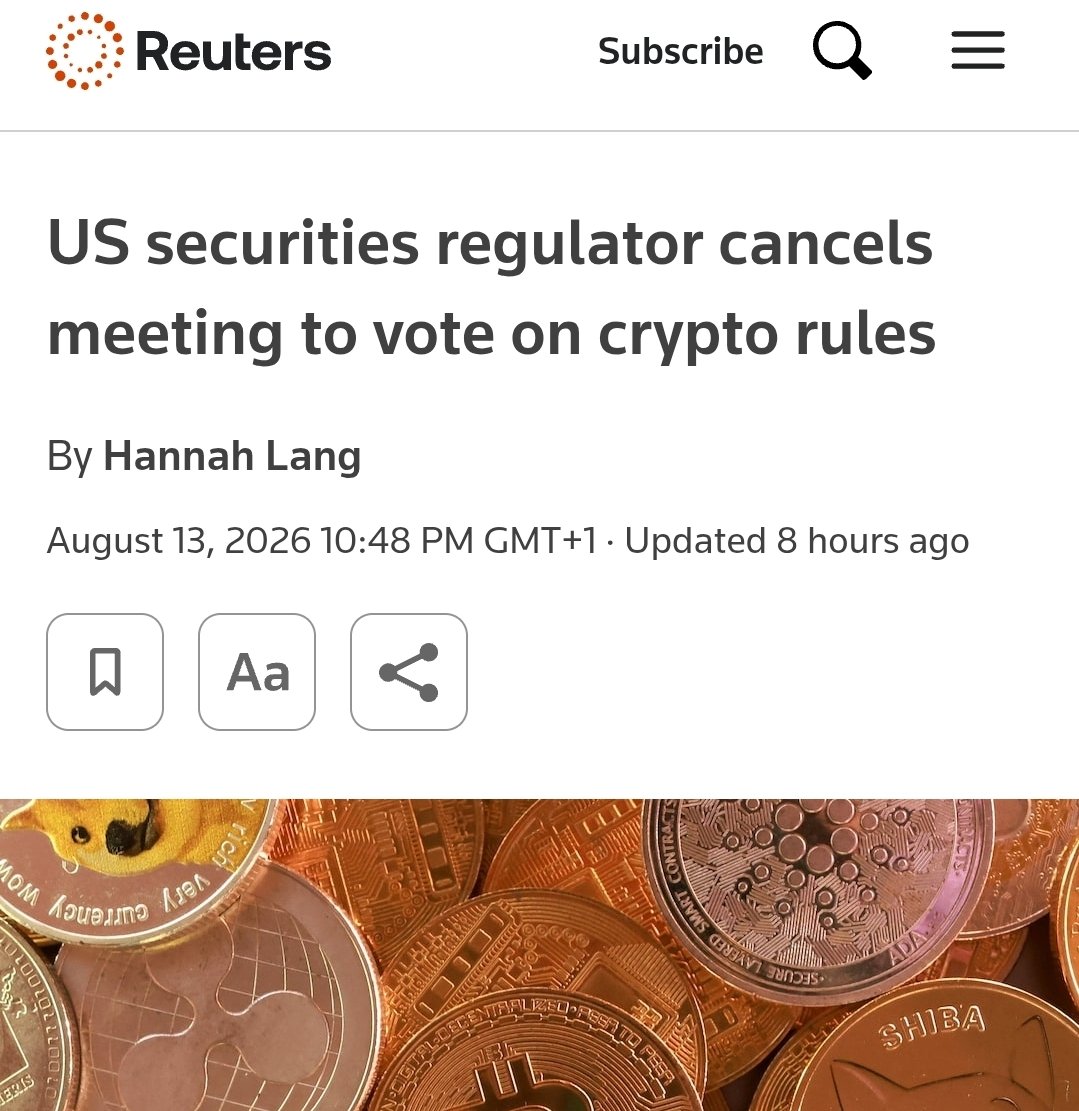
The US Securities and Exchange Commission abruptly canceled a scheduled meeting to vote on restrictive new crypto custody and exchange rules, signaling a major retreat for the agency's remaining anti-crypto faction under the new Paul Atkins era.
The brief
This last-minute retreat is a clear white flag from the agency's legacy enforcement wing, proving that hostile, unvoted rules can no longer survive under a pro-market commission.
The sides
- Regulatory Holdouts
The SEC must push through strict custody rules to protect investors from structural digital asset risks.
- Crypto Innovators
The agency is quietly abandoning outdated, hostile enforcement tactics to align with a pro-innovation federal mandate.
Why now
Market participants and policy analysts are closely watching the SEC's internal power shift as the agency transitions away from hostile enforcement-first tactics.
The abrupt cancellation of a major regulatory vote represents a concrete victory for digital asset platforms seeking regulatory clarity and an end to administrative overreach.
Questions
Why did the SEC abruptly cancel its scheduled vote on crypto custody rules?
The SEC canceled the vote because the agency's anti-crypto faction lost its political leverage following the transition to new leadership under Paul Atkins. Pushing through restrictive rules at the eleventh hour became impossible once the administrative state's enforcement-first crusade lost its backing from the executive branch. Bureaucratic holdouts realized that any last-minute regulations would be immediately targeted for reversal under the Congressional Review Act.
How does the leadership change at the SEC affect existing crypto lawsuits?
The arrival of Paul Atkins signals a shift from aggressive litigation to a collaborative, rule-making approach that will likely result in the dismissal or settlement of non-fraud enforcement actions. Ongoing lawsuits against major exchanges over secondary market sales are expected to be systematically wound down. The agency is pivoting toward establishing clear registration pathways rather than trying to regulate digital assets out of existence through endless court battles.
What is the Congressional Review Act and how does it protect crypto firms here?
The Congressional Review Act is a legislative tool that allows Congress to overturn newly issued federal agency rules with a simple majority vote within 60 legislative days of their submission. Because the SEC canceled its last-minute vote, the agency avoided passing rules that Congress would have immediately struck down. This mechanism effectively neutralizes any parting shots from outgoing regulators who want to saddle the industry with hostile compliance burdens.
Who benefits most from the SEC canceling this specific regulatory vote?
US-based digital asset platforms and institutional custodians benefit most because they escape a highly restrictive compliance trap designed to make holding crypto legally unviable. Under the proposed rules, banks and broker-dealers would have faced prohibitive capital requirements just to custody digital assets. The cancellation allows these firms to build out secure onchain infrastructure without the threat of sudden administrative penalties.
What is the strongest counter-argument in favor of the SEC's original restrictive rules?
Proponents of the strict rules argue that without rigid federal custody standards, retail investors remain highly vulnerable to platform insolvencies and internal fraud similar to the FTX collapse. They contend that forcing crypto platforms into the legacy banking regulatory framework is the only way to prevent systemic contagion. However, critics point out that this approach simply forces capital offshore into unregulated jurisdictions instead of fostering safe domestic markets.
What are the next steps for crypto regulation under the new SEC administration?
The SEC will focus on creating a clear, tailored disclosure framework that distinguishes utility tokens from traditional investment contracts. This transition will involve coordinating with the CFTC to establish joint jurisdiction over digital commodity spot markets. Instead of relying on surprise subpoenas, the new administration will issue formal requests for comment to build a predictable compliance regime.
Receipts
Related dispatches
- The CLARITY Act countdown exposes the SEC's legacy of regulatory paralysisFor years, the federal government preferred regulation by enforcement, keeping crypto in a permanent state of legal purgatory to protect legacy banking cartels. The push for the CLARITY Act isn't about escaping oversight; it is about demanding a predictable, written rulebook so builders can build in America instead of being forced offshore by weaponized ambiguity.
- Congress tries to kill crypto market structure bill with ethics baitEthics rules in Washington are rarely about ethics; they are the preferred procedural weapon to choke off industries you do not like. By demanding hyper-specific asset bans, opponents get to pose as consumer champions while keeping the SEC's arbitrary enforcement-first regime alive.
- Russia Codifies the Crypto Sanction-ShieldThe state that once threatened to ban Bitcoin has officially designated it as its financial life raft, proving that when the legacy banking system is weaponized, math wins over geopolitical consensus.
- The AI Trade Got Margin Called: Crypto Didn't BlinkHedge funds ate each other AI books at fifty cents on the dollar while crypto kept trading like the margin call was scheduled theater.
- The CLARITY Act Ethics CompromiseThe political class spent years pretending crypto regulation was a high-minded debate over consumer protection and systemic risk. In reality, the entire legislative logjam was broken the second politicians traded away their right to pump personal memecoins from the Oval Office.
- The New Plan to Make Ethereum WinEthereum split its growth shops into separate labs so regulators chase paperwork while builders keep shipping.